


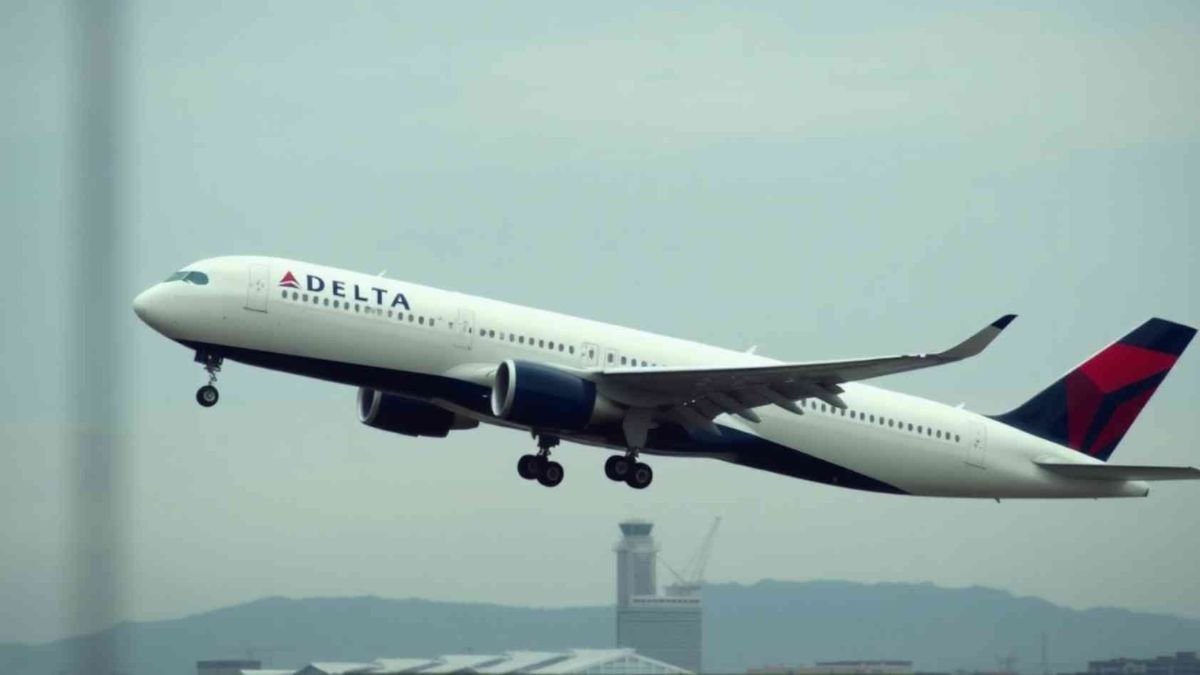
When people started searching for delta flight dl275 diverted lax, the first reaction was obvious: concern. A flight that was supposed to travel from Detroit to Tokyo Haneda suddenly ended up in Los Angeles. For passengers, families, and aviation watchers, that kind of route change naturally raises questions. Was the aircraft in danger? Why did it land at LAX? Why not continue to Tokyo?
The simple answer is that Delta Flight DL275 diverted because of a reported technical issue involving the aircraft’s engine anti-ice system. The aircraft landed safely at Los Angeles International Airport, and the diversion appears to have been a careful safety decision rather than a dramatic emergency.
That distinction matters. In aviation, a diversion is not always a sign that something terrible is happening. Sometimes it is the smartest possible move. Pilots are trained to think ahead, especially on long international routes where the aircraft may soon enter remote airspace with fewer landing options.
For readers who follow developing travel stories and aviation updates, TrendingStage’s Travel section is a natural place to explore more stories connected with flights, destinations, and passenger experiences.
Quick Facts About Delta Flight DL275
| Detail | Information |
|---|---|
| Flight | Delta Air Lines DL275 |
| Planned route | Detroit to Tokyo Haneda |
| Diversion airport | Los Angeles International Airport |
| Aircraft | Airbus A350-900 |
| Reported issue | Engine anti-ice system problem |
| Main concern | Reduced safety margin before remote long-haul flying |
| Outcome | Aircraft landed safely at LAX |
| Best category | Travel News |
| Alternative category | Aviation News |
What Happened on Delta Flight DL275?
Delta Flight DL275 was operating a long-haul route from Detroit Metropolitan Wayne County Airport to Tokyo Haneda. This is not a short hop where airports are always nearby. It is a major international journey that can involve long stretches over northern and oceanic airspace.
During the flight, the crew reportedly identified an issue connected to the engine anti-ice system. Instead of continuing toward Japan, the pilots made the decision to divert to Los Angeles International Airport.
To a passenger looking at the flight map, this may have looked strange. Los Angeles is not on the way to Tokyo in the way most travellers imagine. But aircraft diversions are not chosen based on what looks neat on a map. They are chosen based on safety, runway capability, airport facilities, fuel planning, weather, maintenance support, and passenger handling.
LAX offered all of that.
Why Did Delta Flight DL275 Divert to LAX?
The reported reason behind the delta flight dl275 diverted lax incident was an engine anti-ice system issue. This system helps prevent ice from building up around critical engine areas during flight.
At cruising altitude, aircraft fly through extremely cold air. When moisture is present, ice can form in places where it may affect airflow or performance. The engine anti-ice system helps manage that risk by using heat to protect important engine surfaces.
An issue with this system does not automatically mean the engine has failed. It does not mean the aircraft was falling or that passengers were in immediate danger. Modern long-haul aircraft are built with advanced monitoring systems, and pilots are trained to respond before a problem becomes more serious.
That is the key point. The crew did not wait for the situation to worsen. They acted early.
Why LAX Was a Practical Choice
Los Angeles International Airport is one of the best-equipped airports in the United States. It has long runways, wide-body aircraft experience, emergency support, international passenger facilities, Delta operations, and access to technical support.
For a large aircraft like the Airbus A350-900, the diversion airport must be able to handle the aircraft safely and support passengers afterward. A safe landing is only one part of the decision. The airline also has to consider what happens once the aircraft reaches the gate.
Can passengers be rebooked? Are hotels available if needed? Are there airline staff on the ground? Can maintenance teams inspect the aircraft? Can the airport manage a long-haul international diversion without creating more problems?
LAX was a strong answer to all of those questions.
Readers interested in how technology supports modern decision-making can also explore TrendingStage’s Technology section, because aviation safety today depends heavily on monitoring systems, data, communication, and operational planning.
Was Delta Flight DL275 an Emergency Landing?
This is one of the biggest questions people ask after seeing the phrase delta flight dl275 diverted lax. The answer depends on how people define emergency.
In public language, many people call every diversion an emergency. In aviation, the situation is more specific. A diversion simply means the flight changed its planned destination. That can happen because of weather, a medical issue, a technical concern, airport closure, passenger disruption, or operational planning.
Based on available reports, this was a technical diversion and the aircraft landed safely. That makes it very different from a crash or uncontrolled emergency.
A good way to understand it is this: the pilots saw a problem that could matter later, especially over remote airspace, and chose to land at a capable airport while they still had excellent options.
That is not panic. That is professional judgement.
Why the Engine Anti-Ice System Matters on Long-Haul Flights
On a short domestic flight, the crew may have many airports nearby if a technical problem appears. On a long-haul international flight, especially one crossing remote areas, the calculation changes.
A system that might be manageable near land becomes more important when the aircraft is about to spend many hours far from major airports. Pilots have to think not only about the current moment, but also about the next several hours of flight.
The engine anti-ice system is especially important because long-haul aircraft often fly in cold, moisture-prone environments. If a fault appears before entering a more remote section of the route, diverting early can preserve safety margins.
That is why the delta flight dl275 diverted lax story is less about danger and more about caution. The safest decision in aviation is often the one that prevents a bigger problem from ever developing.
What Passengers Likely Experienced
For passengers, the experience was probably exhausting. Imagine preparing for a long flight to Japan, settling in for hours of travel, and then learning that the aircraft will land in California instead. Even when the aircraft is safe, uncertainty can make the situation stressful.
Passengers may have worried about missed connections, hotel arrangements, business meetings, family plans, luggage, and when they would finally reach Tokyo. A safe landing does not erase the inconvenience.
This is where airline communication becomes very important. Passengers need clear updates from the crew and ground staff. They need to know why the diversion happened, what the next steps are, and how their journey will continue.
A diversion is a technical event for the airline, but for passengers it is personal. It affects schedules, emotions, sleep, money, and trust.
The Role of the Airbus A350-900
The Airbus A350-900 is a modern long-haul aircraft designed for international flying. It is widely used by major airlines because of its efficiency, range, comfort, and advanced systems.
One of the reasons modern aviation is so safe is that aircraft like the A350 are constantly monitoring themselves. When something is not working as expected, the crew receives alerts and follows established procedures.
This does not mean aircraft never have technical problems. They do. But the systems are designed to detect issues early, giving pilots time to make controlled decisions.
In this case, the aircraft landed safely at LAX. That outcome shows the value of aircraft monitoring, pilot training, airline operations, and airport readiness working together.
For broader coverage of trending stories and public-interest updates, readers can also visit TrendingStage’s News coverage, where fast-moving topics are explained in a more readable way.
Why This Story Became a Trending Search
The search term delta flight dl275 diverted lax became popular because the route change looked unusual. A Detroit-to-Tokyo flight landing in Los Angeles catches attention immediately. Flight tracking websites and social media make these moments visible in real time, often before people understand the reason behind them.
Some people searched because they were passengers or family members. Some were aviation enthusiasts. Others simply saw the story online and wanted a clear explanation.
The problem with viral aviation stories is that they can sound more frightening than they really are. A technical diversion can quickly be described as a dramatic emergency if the details are not explained properly.
That is why context matters. The aircraft did not disappear, crash, or land in chaos. It diverted to a major airport and landed safely after a reported technical issue.
What Travellers Can Learn From This Incident
The biggest lesson is that diversions are part of aviation safety. No passenger wants a delay, but every passenger wants a crew that takes technical warnings seriously.
Travellers should understand that pilots do not make diversion decisions casually. A diversion affects fuel planning, aircraft positioning, crew schedules, passenger support, maintenance, and airline costs. If a crew chooses to divert, there is a reason.
Another lesson is that safety decisions often look inconvenient from the outside. Passengers may think, “Why not just continue?” But pilots are not only thinking about the next few minutes. They are thinking about weather, route, aircraft systems, distance from airports, and the safest available options.
In that sense, the delta flight dl275 diverted lax incident is a reminder that arriving late is always better than accepting unnecessary risk.
How to Follow Flight Diversion Updates Safely
When a flight diversion starts trending, many posts online may be incomplete or exaggerated. If you are trying to understand what happened, check reliable sources first.
Use the airline’s official app or website if you are a passenger. Check official airport updates when available. Flight tracking tools can show route changes, but they may not explain the reason. Aviation incident reports and reputable aviation news sources can add better context.
Avoid trusting random posts that claim disaster without evidence. In aviation, details matter. A medical diversion, technical diversion, weather diversion, and security diversion are very different events.
Final Thoughts
The Delta Flight DL275 diversion to LAX was disruptive, but it also showed modern aviation safety working as it should. The flight was scheduled to travel from Detroit to Tokyo Haneda, but after a reported issue with the engine anti-ice system, the crew chose to divert to Los Angeles International Airport.
That decision may have frustrated passengers, but it protected safety margins before a long remote route. LAX offered the runway capability, maintenance access, airline support, and passenger handling needed for a safe and practical outcome.
The real story behind delta flight dl275 diverted lax is not fear. It is preparation. It is a crew making a conservative decision. It is a modern aircraft detecting a problem early. And it is a reminder that in aviation, safety is not only about avoiding accidents. It is about making the right decision before danger has a chance to grow.
FAQs
What happened to Delta Flight DL275?
Delta Flight DL275 was flying from Detroit to Tokyo Haneda when it diverted to Los Angeles International Airport after a reported engine anti-ice system issue.
Why did Delta Flight DL275 divert to LAX?
The flight diverted to LAX because Los Angeles offered a safe and practical airport with long runways, airline support, maintenance capability, and passenger handling resources.
Was Delta Flight DL275 an emergency landing?
Available reports describe it as a technical diversion rather than a crash or uncontrolled emergency. The aircraft landed safely at LAX.
What aircraft operated Delta Flight DL275?
The flight was operated by an Airbus A350-900, a modern wide-body aircraft used for long-haul international routes.
Why is the engine anti-ice system important?
The engine anti-ice system helps prevent ice buildup around important engine areas during cold, high-altitude flight conditions.
Were passengers safe on Delta Flight DL275?
Yes, the aircraft landed safely at Los Angeles International Airport. The diversion was a precautionary safety decision.
Written by
TrendingStage News Desk
Business, Technology, LAW, Sport & Digital Marketing
View all articles by the team →