


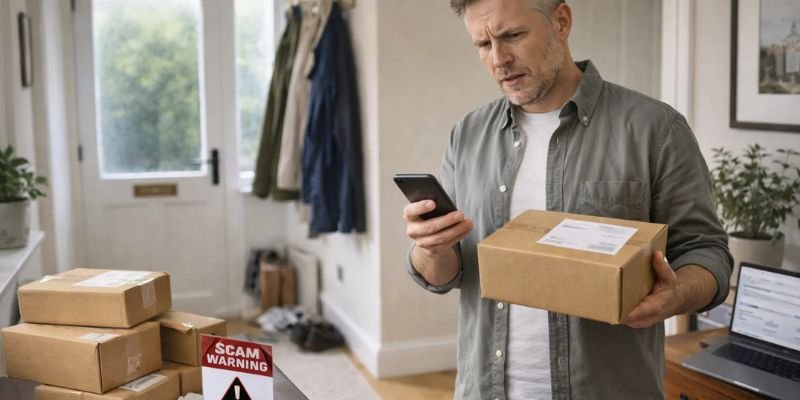
If you recently received a parcel text, delivery label or tracking update showing eTarget Limited, your first reaction may have been confusion. Most people expect to see the name of the shop they ordered from. So when a different company name appears, especially one they do not recognise, it naturally raises questions.
Is eTarget Limited a real company? Is the parcel safe? Did you order something without remembering it? Or is this another delivery scam using a familiar-looking name?
That confusion is exactly why people search for eTarget Limited. The name often appears in the space between online shopping, courier tracking, third-party fulfilment and scam awareness. In simple words, it may be connected to the dispatch side of a parcel rather than the store you personally bought from. But that does not mean every text or message using the name should be trusted blindly.
The smart approach is not panic. It is verification.
For readers who follow online safety, digital alerts and practical technology explainers, TrendingStage’s Technology section is a useful place to explore similar guides around how digital systems affect daily life.
Quick Facts About eTarget Limited
| Detail | Information |
|---|---|
| Name people search | eTarget Limited |
| Common reason for search | Parcel label, Royal Mail text or delivery alert |
| Main confusion | Customer does not recognise the sender name |
| Possible explanation | Third-party fulfilment or dispatch process |
| Main risk | Fake delivery texts using courier-style wording |
| Best action | Track through the official courier website |
| Best category | Technology |
| Secondary category | Business |
| Reader intent | Is it real, fake, safe or linked to my order? |
Why Is eTarget Limited Showing on a Parcel?
The most common reason eTarget Limited appears on a parcel or delivery update is that the item may have been processed through a third-party fulfilment or dispatch system. This happens more often than many shoppers realise.
When you buy from an online marketplace, the seller may not personally pack and ship your item. Instead, they may use a fulfilment warehouse or logistics partner. That partner may handle storage, labelling, packaging and dispatch. As a result, the name shown on the courier label may be different from the brand or seller you remember.
This is why someone may buy a product from an online store and later receive a delivery message naming eTarget Limited. It can feel suspicious at first, but it may simply mean the seller used a fulfilment partner.
The problem is that customers are rarely told this clearly. That gap creates confusion, and confusion is exactly what scammers like to exploit.
Is eTarget Limited Real?
There is a UK registered company listed as E-TARGET LIMITED on Companies House. That means the name is not just random internet fiction. However, this point needs careful explanation.
A real company name does not automatically make every parcel, text or tracking message genuine. Scammers can copy or misuse real business names. They often use delivery-related wording because people are used to receiving parcel notifications and may click quickly without checking.
So the better question is not only “Is eTarget Limited real?” The better question is: “Is this specific message or parcel connected to a real order I placed?”
That is the difference that matters.
Why People Think eTarget Limited Might Be Fake
People search “eTarget Limited fake” because the name often appears without enough context. Imagine receiving a text saying your parcel from eTarget Limited will be delivered today, but you never bought anything from a company with that name. It would make anyone pause.
There are several reasons this can happen. You may have ordered from a marketplace seller that uses a different fulfilment name. Someone in your household may have placed an order. A delayed parcel may finally be arriving. Or the message may be fake and designed to push you toward a scam link.
This is why eTarget Limited sits in a tricky place online. Some searches come from normal delivery confusion. Others come from genuine scam concerns. A good article has to explain both sides honestly.
Readers interested in how business services operate behind the scenes may also find TrendingStage’s article on working with a certified translation company useful, because it also shows how specialist service providers support wider business operations without always being visible to the end customer.
How to Tell If an eTarget Limited Text Is Safe
A delivery text should always be checked carefully, especially if it asks you to click a link or pay a fee. Fake parcel messages are common because they create urgency. Many people are waiting for online orders, so scammers know a delivery text can feel believable.
Here is a simple way to judge the message.
| Message Detail | Safer Sign | Warning Sign |
|---|---|---|
| Tracking link | Leads to official courier website | Strange, shortened or misspelled link |
| Payment request | No surprise fee requested | Asks for redelivery or customs payment |
| Tone | Clear and neutral | Urgent or threatening |
| Personal details | Does not ask for bank information | Requests card details or login |
| Tracking number | Works on official courier site | Does not match any real tracking page |
| Sender name | Recognisable courier or order update | Random number with vague message |
If the message asks for payment, personal details or immediate action, slow down. Do not click the link inside the text. Go directly to the courier’s official website and enter the tracking number yourself.
What Should You Do If You Receive an eTarget Limited Parcel?
If a parcel arrives with eTarget Limited on the label, start by checking your recent online orders. Look through your email receipts, marketplace accounts, bank transactions and delivery notifications. Many mystery parcels become clear once you connect them with a small order placed days or weeks earlier.
Check Amazon, eBay, TikTok Shop, Temu, PayPal, independent stores and any apps you recently used. Sometimes the product name or seller name will not match the fulfilment name, but the tracking number, price or delivery date will give it away.
If the parcel matches something you ordered, there may be nothing to worry about. If it does not match anything, keep the packaging, take photos and avoid scanning QR codes or following instructions from unknown inserts.
The key is to create a record before taking action.
What If You Did Not Order Anything?
An unexpected parcel can happen for several reasons. It may be a gift, a delayed item, a mistaken delivery, a marketplace error, or in some cases, a brushing-style situation where low-value items are sent to people to create fake sales activity.
If you receive something you did not order, do not pay any unexpected fee. Do not contact random numbers printed on suspicious paperwork. Do not share personal information with anyone claiming they need to “verify” the delivery.
Instead, check whether your name and address appear correctly. Review your online accounts for unfamiliar orders. If the parcel appears linked to a marketplace, report it through your official account. If you suspect your personal details have been misused, update passwords and monitor your bank activity.
This is not about overreacting. It is about protecting yourself without falling into panic.
Why Parcel Names Are So Confusing Now
Online shopping has become more complicated than it looks from the customer side. You might buy from one website, pay through another system, receive a courier update from a third party and see a fulfilment name you do not recognise on the label.
To the seller, this may be normal logistics. To the customer, it feels strange.
Modern e-commerce often includes multiple layers: seller, marketplace, payment processor, warehouse, fulfilment company, courier and final delivery team. The customer only remembers the store name, but the parcel label may show someone else in the chain.
That is why eTarget Limited has become a searched term. It represents a wider problem in online shopping: customers want transparency, but logistics often stays hidden until the parcel arrives.
For broader digital and business-related explainers, readers can also explore TrendingStage’s Business section, where topics around companies, services and online operations are easier to understand.
Does eTarget Limited Sell Products?
Many people ask what eTarget Limited sells because they see the name on a parcel. But in many delivery situations, the company on the label may not be the public-facing seller.
This is important. The name on a package can belong to a warehouse, fulfilment provider, dispatch partner or logistics-related service. That means the buyer may never have directly shopped from eTarget Limited.
Instead of asking only what eTarget Limited sells, check what you bought recently and who handled the shipping. Your order confirmation, tracking number and marketplace account will usually give a clearer answer than the parcel name alone.
How to Track an eTarget Limited Parcel Safely
If you have a tracking number, use the official courier website. If the message mentions Royal Mail, go directly to Royal Mail’s official tracking page. Do not rely on links from unknown texts.
A genuine tracking number should show movement once the courier has received or scanned the item. If it says the sender has advised the courier but there are no updates yet, the parcel may still be waiting to enter the delivery network.
If the tracking number does not work anywhere, be careful. It may be too early, incorrectly typed or not genuine. In that case, check your order account or contact the seller through the official platform.
Never enter card details just because a text says your parcel is waiting.
Why Scammers Use Delivery Messages
Parcel scams work because they feel normal. People shop online all the time. A message saying “your parcel could not be delivered” does not feel unusual anymore.
Scammers use that familiarity to create quick reactions. They may ask for a small redelivery fee, claim your address is incomplete or say your parcel will be returned unless you act now. The fee may look tiny, but the real aim is to steal card details or personal information.
This is why any delivery message linked to eTarget Limited, Royal Mail or another courier should be checked independently. The issue may not be the name. The issue is the link, the request and the pressure.
A Business Lesson From the eTarget Limited Confusion
The eTarget Limited search trend also teaches an important business lesson. Customers want clarity. If a seller uses a third-party fulfilment company, the customer should ideally know that before delivery. A simple line in the order confirmation could reduce confusion.
For example, a seller could say: “Your item may be dispatched by our fulfilment partner.” That small detail builds trust.
In online shopping, trust is not only created by fast delivery. It is created by clear communication. When customers understand who is handling their parcel, they are less likely to assume something suspicious.
Businesses that ignore this may save time internally, but they create confusion externally.
Final Thoughts
Seeing eTarget Limited on a parcel or delivery text does not automatically mean something is wrong. It may simply be a fulfilment or dispatch name linked to an online order. At the same time, delivery scams are real, and any text asking for payment, personal details or urgent action should be treated carefully.
The safest approach is simple: check your order history, use official courier tracking, avoid suspicious links and never share financial details through a random text.
The reason people search eTarget Limited is not just curiosity. It is uncertainty. And in modern online shopping, uncertainty is common because the delivery chain is often hidden behind the scenes.
If a parcel is genuine, proper checking will usually confirm it. If a message is fake, careful checking can protect you before damage is done.
FAQs
What is eTarget Limited?
eTarget Limited is a name people often see on parcel labels, delivery texts or tracking updates. It may be connected to fulfilment or dispatch processes behind an online order.
Is eTarget Limited a scam?
The name itself does not prove a scam. A UK registered company with the name E-TARGET LIMITED exists, but scammers can misuse real company names in fake parcel texts.
Why did I get a parcel from eTarget Limited?
You may have ordered from an online seller that used a fulfilment partner. Check your recent orders, email receipts and marketplace accounts to match the parcel.
Should I click a text link about an eTarget Limited parcel?
No, not until you verify it. Go directly to the official courier website and enter the tracking number manually.
What should I do if I did not order anything?
Keep the packaging, check your accounts, avoid sharing personal details and report the issue through the official marketplace or courier if needed.
What category should this article use on TrendingStage?
The best category is Technology because the topic involves parcel tracking, delivery alerts, online shopping systems and scam awareness. Business can be used as a secondary category.
Written by
TrendingStage Editorial Team
Technology, Lifestyle, Entertainment & Trending News
View all articles by the team →