


Wedding flower budgets can grow quickly when every part of the day seems to need blooms: the arch, aisle, tables, bridesmaid bouquets, boutonnieres, and corsages. The hard part is not simply spending less. It is knowing which flowers can be simplified and which ones still need to look strong in photos.
For most brides, the bouquet belongs in the group worth protecting. It appears beside the dress, in portraits, during the ceremony, and in close-up detail shots. That makes it one of the smartest places to protect the look of the wedding while controlling the overall floral budget.
Faux bridal bouquets fit that need because they give brides more control over cost, color, timing, and photo consistency without making the bouquet feel like an afterthought.
Start With the Flowers Closest to the Camera
When the floral budget is limited, rank flowers by how often they will be seen up close. Divide flowers into three groups: flowers held by people, flowers placed near the ceremony, and flowers used as background decor.
The first group usually deserves the most attention because it appears beside faces, dresses, and close-up details. The last group can often be simplified without making the wedding feel bare.
The bridal bouquet works differently from most decor because it moves with the bride. It appears in portraits, family photos, ceremony images, and flat lays with rings, invitations, shoes, or perfume.
So instead of asking, “How many flowers can we remove?” couples can ask, “Which flowers need to look strongest in photos?” A well-designed bridal bouquet, coordinated bridesmaid flowers, and a few matching accents can make the wedding feel cohesive even when table flowers stay simple.
Choose a Bouquet That Sets the Visual Direction
A bouquet should make sense beside the dress, makeup, venue, season, and wedding colors. If it clashes with those details, the photos can feel slightly disconnected. If it fits, even a simple wedding can look more styled than it actually costs.
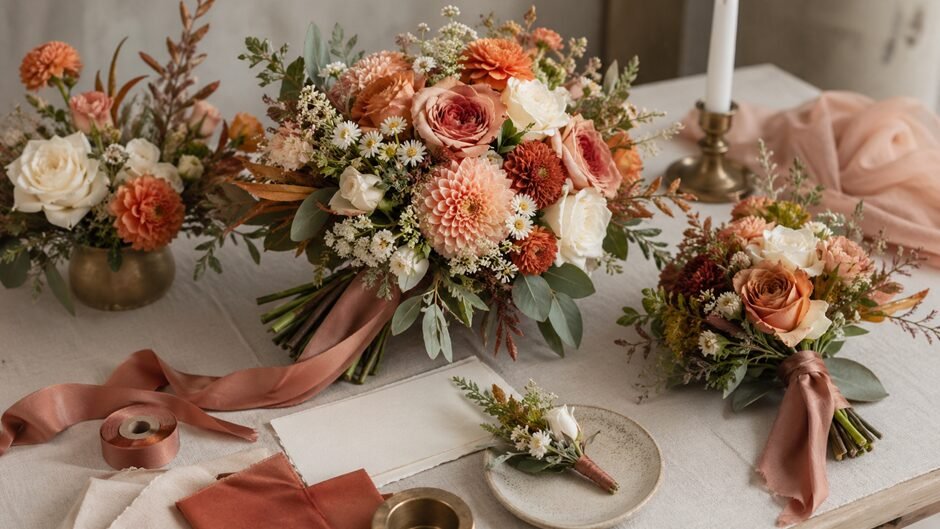
Before choosing a bouquet, compare it against three things: the dress fabric, the bridesmaid color, and the ceremony backdrop. A garden wedding can lean on ivory, blush, and soft greenery. A fall wedding may feel richer with terracotta, rust, cream, and muted orange. A classic indoor wedding often looks better with white blooms and green accents.
Once the bouquet direction is clear, the rest of the floral plan becomes easier. Bridesmaid bouquets, boutonnieres, corsages, and small decor pieces can echo the bouquet’s colors without needing to be equally full or expensive.
Why Faux Bridal Bouquets Work Well for Outdoor and Destination Weddings
Fresh flowers are beautiful, but they come with moving parts. A bloom that is affordable in one season may be expensive in another. Heat can soften arrangements during outdoor ceremonies. Delivery timing can become one more thing to manage on a busy morning. For some brides or guests, pollen is also a real concern.
Faux bridal bouquets give couples more control before the wedding day arrives. Brides can see the bouquet ahead of time, check the colors against dresses or decor, pack it for travel or destination weddings, and keep it after the celebration. For outdoor weddings, summer ceremonies, destination weddings, or DIY timelines, that predictability can matter as much as the price.
For budget-conscious brides, the bouquet is usually the faux floral item that needs to look the most convincing. It will be held against the dress, photographed in portraits, and seen up close during the ceremony, so the choice cannot feel like a simple cost-cutting move.
In that context, Rinlong fake wedding flowers fit as a bridal bouquet option for brides who want soft, balanced florals without depending on fresh blooms. The real test is whether the bouquet supports the wedding style in photos, not whether guests can tell how much was saved.
Choosing Fake Flowers for Wedding That Look Real
Choosing fake bridal bouquets should not start and end with the lowest price. A budget-friendly bouquet still needs depth, natural color blending, and a shape that suits the dress, venue, and overall wedding style. Otherwise, the savings may show in the photos.
Close-up photos are the real test. A bouquet may look fine from a distance but appear flat, shiny, or overly uniform beside lace, satin, jewelry, or detailed makeup. Brides should look for soft color transitions, realistic petal shapes, balanced greenery, and a size that fits their frame.
A budget bouquet only works if it still feels believable in the photos that matter most. Before choosing one, brides should imagine the bouquet against the dress, beside the rings, and in close-up portraits where petal texture and color transitions are easy to notice.
For brides comparing realistic bouquet options, Rinlong fake flowers for wedding can serve as a useful bridal bouquet reference, especially when the goal is a soft, photo-ready look without fresh-flower timing pressure.
Use Color Palettes to Make Budget Florals Feel Intentional
One reason some wedding flowers look more expensive than they are is color consistency. When the bouquet, bridesmaid flowers, boutonnieres, corsages, and small decor pieces share the same tones, the wedding feels planned rather than patched together.
For example, a bride using a terracotta and ivory bouquet does not need every table arrangement to be full and dramatic. A small centerpiece with ivory flowers, muted orange accents, and greenery can echo the bouquet without copying it exactly. That repetition makes the wedding look intentional while keeping the floral order manageable.

Some couples also mix faux bouquets with simple fresh greenery or smaller fresh table arrangements. This can be a practical middle ground: use faux flowers where timing, color control, and close-up consistency matter most, then simplify the background florals.
Final Thoughts
Build the floral plan around the bouquet first. Choose the bouquet style and color palette, then simplify outward: bridesmaid flowers, boutonnieres, corsages, ceremony accents, and table decor.
When the bouquet sets the visual direction, couples can simplify other floral details without making the wedding feel under-designed. The result is a wedding flower plan that feels beautiful, coordinated, and budget-aware.